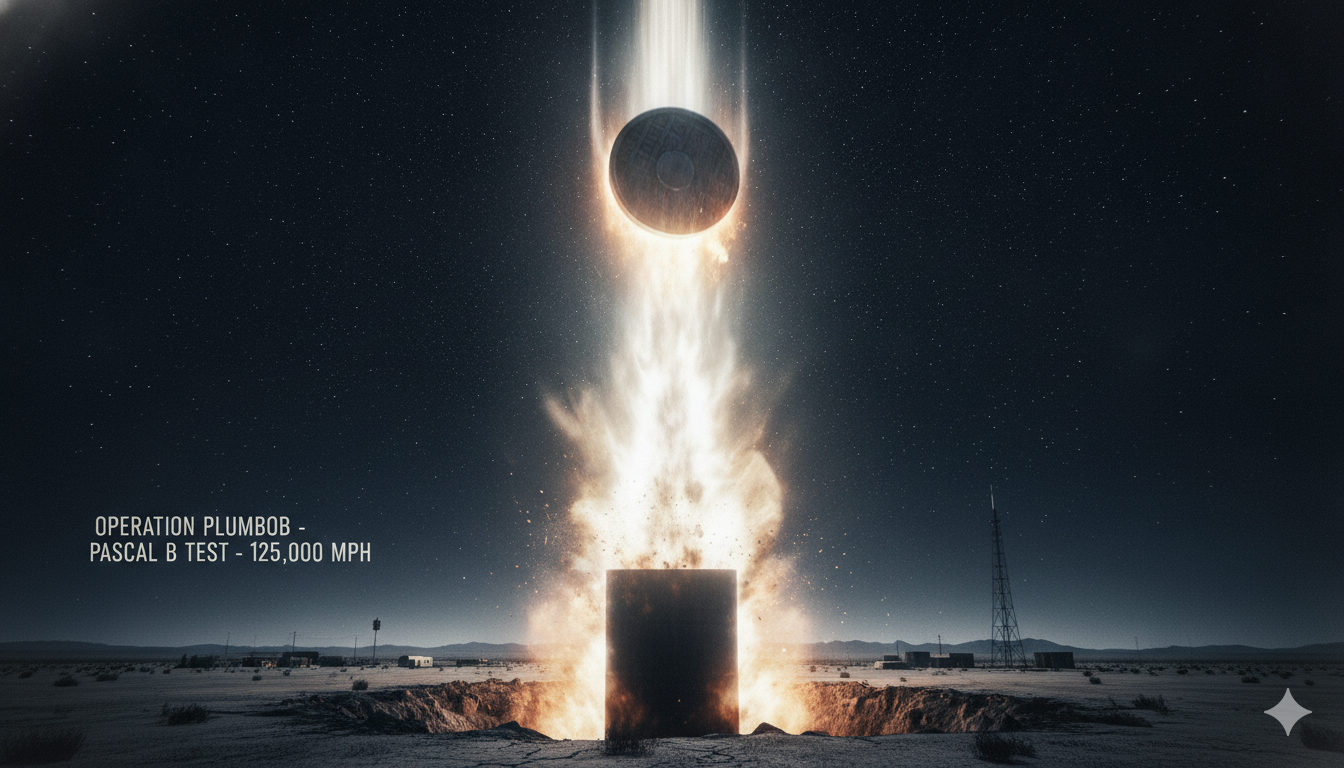
Have you ever looked down at the street and wondered about that heavy piece of metal under your feet? A standard manhole cover usually has a very boring job. It sits over a dark hole in the road to keep cars and people safe from falling. But back in 1957, one specific iron lid became part of an unbelievable science story. It left its quiet spot on earth and blasted toward the stars at a shocking speed.
Many people call this wild object the fastest manhole cover in human history. Scientists were testing powerful bombs in the desert when things went wrong in a spectacular way. The giant explosion shot the metal lid into the sky like a bullet from a cosmic gun. Today, we are going to explore the crazy truth, the math, and the big myths behind this legendary manhole cover in space.
What is a Manhole Cover Made From?
To understand how this object flew so fast, we must look at what it actually is. A standard manhole cover is made from strong cast iron or tough concrete. Cities use these materials because they can handle heavy trucks driving over them every single day. They are built to last for decades without cracking or bending under pressure.
The heavy iron keeps the lid locked tight inside its round frame. You cannot just lift one up with your bare hands easily. This heavy design is important for safety so that heavy rain or thieves cannot move it. But as heavy as they are, a massive nuclear blast can still launch them like a plastic toy.
How Much Does a Manhole Cover Weigh?
You might wonder exactly how much does a manhole cover weigh when you see them on the street. A normal street lid usually tilts the scales between 100 and 250 pounds. The weight depends mostly on the size of the hole and the depth of the metal. Some extra large industrial lids can even tip the scales at over 300 pounds.
This high manhole cover weight is what makes the space story so surprising to people. It takes two strong workers with special metal hooks just to lift a normal one up for repairs. Yet, a massive wave of energy managed to treat this heavy iron plate like a flying frisbee. The sheer power needed to move that much weight in a split second is hard to imagine.
The True Story of Operation Plumbbob
Our story takes us back to a secret testing site in the state of Nevada. In the summer of 1957, the American government was running a series of nuclear tests called operation plumbbob manhole cover. Scientists wanted to see what happens when a nuclear bomb explodes deep underground inside a long steel pipe.
[Nuclear Test Site] -> [Deep Steel Pipe] -> [Bomb at Bottom] -> [Manhole Cover on Top]
A brilliant scientist named Dr. Robert Brownlee was leading the special experiment. They welded a thick iron lid onto the very top of the underground tunnel to seal it shut. They expected the cap to hold the pressure inside, but they vastly underestimated the power of the atomic fire below.
The Famous Pascal B Nuclear Test
The specific event that shocked the world was a test named Pascal B. Workers placed a nuclear device at the bottom of a hollow shaft that was 500 feet deep. To seal the top of the opening, they used a large steel plate that looked just like a street manhole cover.
When the bomb went off, it created a massive pocket of super-heated gas inside the pipe. The pressure multiplied a million times over in less than a blink of an eye. The underground pipe basically turned into the world’s largest shotgun, and the heavy metal cap was the tiny pellet sitting at the muzzle.
How Fast Was the Manhole Cover Moving?
When the explosion happened, a high-speed camera was pointed directly at the top of the shaft. The camera was so fast that it took a new picture every millisecond. Yet, the heavy iron cap only appeared in one single frame before it completely vanished from sight.
People always ask how fast was the manhole cover traveling when it left the ground. Dr. Brownlee used the camera data to calculate the mind-boggling speed of the metal plate. The math showed that the blast slapped the metal plate with unimaginable force. It changed from a stationary object to a blazing streak of lightning in a microsecond.
Calculating the Manhole Cover In Space Speed
The final math numbers from the experiment still sound like a wild science fiction movie today. The estimated manhole cover in space speed was around 41 miles per second. To help you understand that, that speed is over 150,000 miles per hour. That is about five times faster than the speed needed to escape Earth’s gravity.
If you want to know how fast did the manhole cover go compared to other things, it is truly wild. It traveled six times faster than a speeding space shuttle orbiting our planet. It was so fast that it could have traveled from New York to Los Angeles in just one minute.
Did the Iron Plate Actually Reach Space?
Because of the massive speed, many space fans believe we sent a manhole cover in space before any rocket. If the metal plate kept moving in a straight line, it would have entered the stars easily. It had more than enough kinetic energy to leave our atmosphere behind forever.
However, science tells us a slightly different story about what likely happened in the sky. Earth is surrounded by a thick blanket of air that acts like a solid wall at high speeds. The intense friction against the air probably turned the heavy metal plate into a shooting star that burned up instantly.
The Mystery of the Missing Metal Lid
Scientists never found the heavy metal plate in the desert sand after the explosion. It did not drop back down near the test site, and no pieces were ever recovered by workers. This lack of physical evidence is what keeps the fun internet myth alive today.
Dr. Brownlee always joked that he never saw the cap land, so it might still be traveling out there. While it probably melted into gas from the air friction, we cannot know the truth for sure. The idea of a lonely piece of city plumbing sailing past the moon is just too cool to forget.
Facts About the Fastest Manhole Cover
Let us look at a helpful data summary of this incredible event to see how the numbers match up. This table shows the biography of the world’s most famous piece of experimental hardware.
| Detail Type | Scientific Measurement Data |
| Official Event Name | Operation Plumbbob (Pascal B Test) |
| Date of Launch | August 27, 1957 |
| Calculated Top Speed | 150,000+ MPH (41 Miles Per Second) |
| Object Material | Thick Industrial Cast Iron / Steel |
| Estimated Weight | At least 200 Pounds |
| Final Status | Missing (Likely vaporized in the air) |
Conclusion
The story of the fastest manhole cover reminds us that science is full of crazy accidents. What started as a simple metal lid became a legend of the atomic age. It shows us how human curiosity can produce results that no one ever expected.
Do you think the heavy metal cap survived the heat and made it into the dark cosmic void? Or do you think it turned to dust before it could ever escape our blue planet? Let us know your thoughts in the comments section below and share this wild history story with your friends!
(FAQs)
What is the primary purpose of a standard manhole cover?
The main job of a standard cover is to seal off underground utility vaults, sewer lines, and water pipes safely. They keep everyday citizens and heavy vehicles from falling into dangerous holes while allowing easy access for city maintenance workers.
Was the Operation Plumbbob lid a real street cover?
Not exactly. It was a heavy, circular steel cap designed to seal a test shaft, but it shared the exact same shape, size, and weight properties as a heavy-duty industrial street lid. This is why everyone calls it by that name today.
Can a nuclear blast really vaporize solid iron?
Yes, it can. The heat from a nuclear explosion is hotter than the surface of the sun. When an object moves at extreme speeds through our thick atmosphere, the friction generates enough heat to melt and vaporize solid metal into gas within seconds.
What holds a normal manhole cover in place on the street?
Gravity is the main force keeping them secure. Because the average manhole cover weight is so high, vehicles can drive over them without flipping them over. Their round shape also prevents them from falling through their own holes.
Who was the scientist that calculated the space speed?
Dr. Robert Brownlee was the astrophysicist who designed the underground test and calculated the incredible speed of the missing cap. He is widely known as the father of this specific space myth.
Has any other object beaten this speed record since 1957?
Human spacecraft like the Parker Solar Probe have traveled faster relative to the sun by using gravity assists. However, for an object launched directly from the surface of the Earth through the atmosphere, this incident remains one of the fastest recorded.